California is a landscape photographer's paradise, offering an incredible diversity of natural beauty within a single state. From the dramatic Pacific coastline to stark desert landscapes, towering mountain peaks, and ancient redwood forests, California's road trips provide endless opportunities for capturing stunning landscape photographs. Here are the best road trips in California for landscape photography.
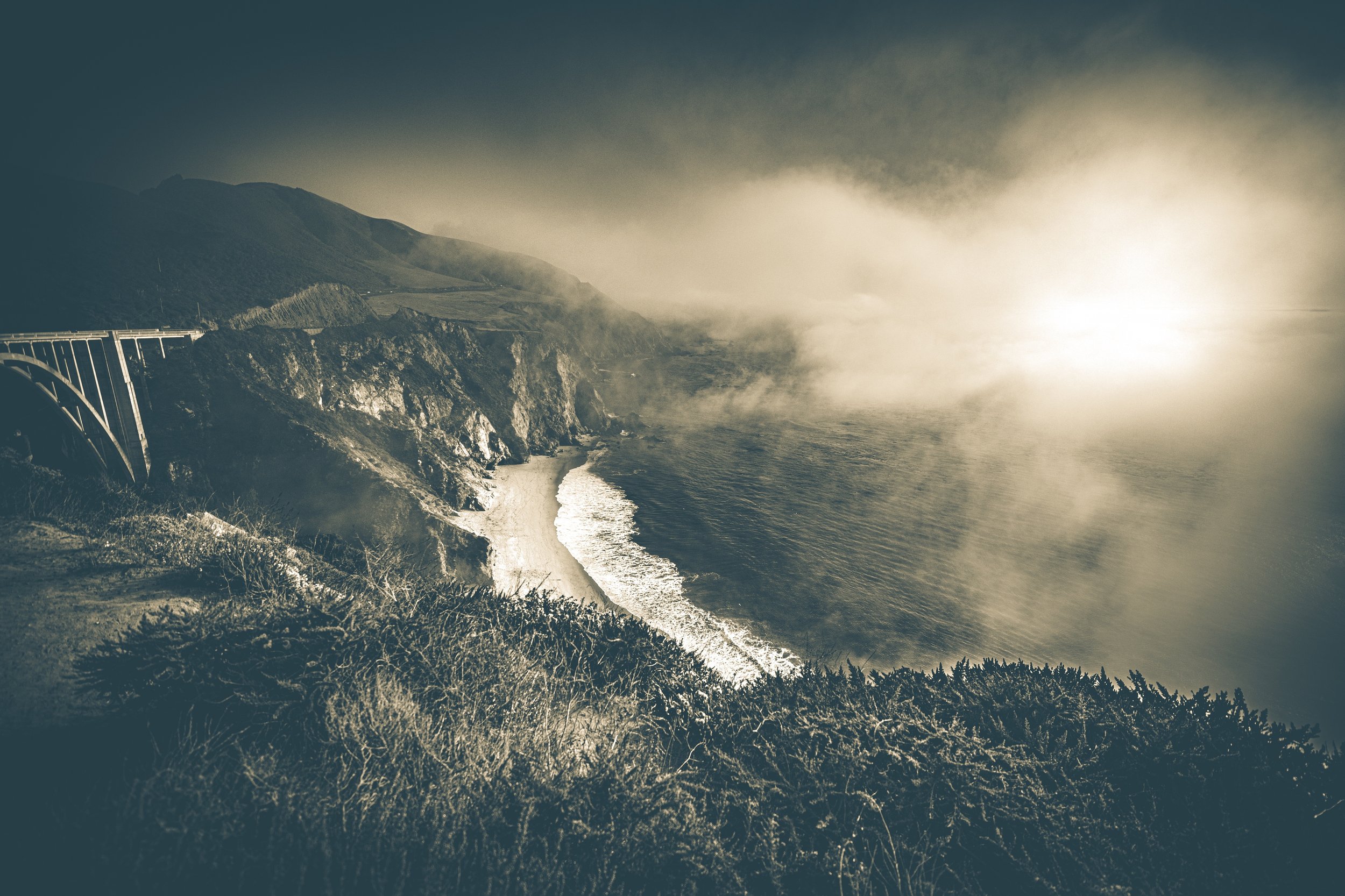
Route: Carmel to San Simeon (approximately 90 miles) Highlights: Bixby Creek Bridge, McWay Falls, Point Lobos, dramatic coastal cliffs Best Time for Photography: Year-round, with spring and fall offering the best weather and lighting Drive Time: 2-3 hours, plus extensive time for photography stops
Why it's top: The 90-mile stretch of Highway 1 through Big Sur is one of the most photographed coastlines in the world. This route offers dramatic coastal cliffs, pristine beaches, iconic bridges, and waterfalls cascading onto beaches. The combination of rugged coastline, ocean vistas, and changing weather conditions creates endless photographic opportunities.
Photography highlights:
- Bixby Creek Bridge: The iconic 79-meter-high bridge offers stunning views of the coastline. Best photographed from the south end during sunset or in foggy conditions for atmospheric shots.
- McWay Falls: An 80-foot waterfall that cascades directly onto the beach in Julia Pfeiffer Burns State Park. Accessible via a short trail to an overlook.
- Point Lobos State Natural Reserve: Rugged coastlines, diverse wildlife, and numerous hiking trails offering varied compositions.
- Garrapata State Park: Wild coastal trails with rocky outcrops and dramatic wave action.
What to expect: Winding roads with numerous pullouts, potential fog (especially in summer), dramatic coastal cliffs, and changing weather conditions that can create atmospheric photography opportunities. The route requires careful driving but offers countless photography stops.
Best for: Coastal photography, dramatic seascapes, bridge photography, and waterfall photography. Perfect for photographers seeking iconic California coastal images.
Note: Check current road conditions before traveling, as sections of Highway 1 can experience closures due to landslides.
Route: Runs along the eastern flank of the Sierra Nevada Highlights: Mono Lake, Alabama Hills, June Lake Loop, Ancient Bristlecone Pine Forest Best Time for Photography: Spring through fall, with fall offering spectacular aspen colors Drive Time: Full day to several days depending on stops
Why it's top: Highway 395 runs along the eastern flank of the Sierra Nevada, offering access to some of California's most dramatic and diverse landscapes. The route provides access to ancient lakes, unique geological formations, alpine lakes, and some of the oldest trees on Earth. The Eastern Sierra offers everything from desert landscapes to alpine scenery.
Photography highlights:
- Mono Lake: Ancient saline lake famous for its tufa towers—otherworldly limestone formations rising from the water. Excellent for sunrise and sunset photography with reflective surfaces.
- Alabama Hills: Near Lone Pine, featuring rounded rock formations set against the backdrop of jagged Sierra peaks, including Mount Whitney. Perfect for golden hour photography with dramatic light and shadow.
- June Lake Loop: A scenic 16-mile drive encompassing four alpine lakes (June, Gull, Silver, and Grant). Particularly stunning in autumn when aspen trees turn vibrant gold and orange.
- Ancient Bristlecone Pine Forest: Home to some of the oldest trees on Earth, the gnarled bristlecone pines set against starry skies make for compelling night photography.
What to expect: Diverse landscapes from desert to alpine, dramatic mountain backdrops, unique geological formations, and seasonal changes that dramatically alter the scenery. The route offers elevation changes and varied weather conditions.
Best for: Mountain photography, alpine lake photography, fall color photography, night/astrophotography, and unique geological formations. Perfect for photographers seeking diverse landscapes in one trip.
Route: Highway 120 (Tioga Pass Road) through Yosemite Highlights: Yosemite Valley, Tuolumne Meadows, Tioga Pass, alpine landscapes Best Time for Photography: Late spring through early fall (Tioga Pass typically closed in winter) Drive Time: Full day to several days
Why it's top: Yosemite National Park is one of the world's most iconic landscape photography destinations. Tioga Pass Road, at 9,945 feet, is California's highest highway pass, providing access to dramatic alpine views, serene meadows, and Yosemite's famous granite formations. The park offers everything from valley views to high alpine landscapes.
Photography highlights:
- Yosemite Valley: Iconic views of El Capitan, Half Dome, and Yosemite Falls. Tunnel View offers one of the most photographed vistas in the world.
- Tuolumne Meadows: High alpine meadows with granite domes and wildflowers in spring and summer.
- Tioga Pass: Dramatic alpine views and access to high-elevation photography opportunities.
- Glacier Point: Panoramic views of Yosemite Valley and Half Dome, especially stunning at sunset.
What to expect: Elevation changes, potential weather variations, crowded conditions in summer, and seasonal road closures. The park requires advance reservations during peak season. Weather can change quickly at high elevations.
Best for: Mountain photography, alpine landscapes, iconic valley views, and waterfall photography. Perfect for photographers seeking world-famous landscape compositions.
Route: Through the heart of Death Valley National Park Highlights: Badwater Basin, Artists Drive, Mesquite Flat Sand Dunes, Zabriskie Point Best Time for Photography: Fall through spring (summer is extremely hot) Drive Time: Full day to several days
Why it's top: Death Valley offers some of the most unique and dramatic desert landscapes in California. The park features the lowest point in North America, colorful eroded hills, vast sand dunes, and stark desert vistas. The extreme conditions create unique photographic opportunities, especially during golden hour and for night photography.
Photography highlights:
- Badwater Basin: The lowest point in North America at 282 feet below sea level, featuring vast salt flats that create abstract compositions.
- Artists Drive: A 9-mile loop featuring colorful, eroded hills in shades of pink, green, and gold. Best photographed during golden hour when colors are most vibrant.
- Mesquite Flat Sand Dunes: Vast sand dunes offering opportunities for abstract compositions, especially during sunrise and sunset.
- Zabriskie Point: Panoramic views of eroded badlands, particularly stunning at sunrise.
What to expect: Extreme temperatures (especially in summer), vast open landscapes, unique geological formations, and excellent conditions for night photography due to dark skies. The park requires preparation for desert conditions.
Best for: Desert photography, abstract compositions, night/astrophotography, and unique geological formations. Perfect for photographers seeking dramatic, otherworldly landscapes.
Route: Through Joshua Tree National Park Highlights: Joshua trees, unique rock formations, desert landscapes, starry skies Best Time for Photography: Fall through spring (summer is very hot) Drive Time: Full day to several days
Why it's top: Joshua Tree National Park is renowned for its unique Joshua trees, rugged rock formations, and expansive desert landscapes. The park's clear skies and distinctive terrain make it a haven for both daytime and astrophotography. The unique combination of desert plants and rock formations creates iconic California desert imagery.
Photography highlights:
- Joshua Trees: The park's namesake trees create unique silhouettes, especially during sunrise and sunset.
- Rock Formations: Unique granite formations throughout the park offer opportunities for abstract and landscape compositions.
- Desert Landscapes: Vast desert vistas with dramatic skies, particularly during storm conditions.
- Night Photography: Clear, dark skies make the park excellent for astrophotography and star trails.
What to expect: Desert conditions, clear skies (excellent for night photography), unique plant and rock formations, and potential for dramatic weather. The park offers both developed areas and backcountry opportunities.
Best for: Desert photography, unique plant photography, rock formation photography, and astrophotography. Perfect for photographers seeking iconic California desert imagery.
Route: Highway 101 through Redwood Country Highlights: Towering redwoods, coastal views, ancient forests Best Time for Photography: Year-round, with spring offering lush undergrowth Drive Time: Full day to several days
Why it's top: Redwood National and State Parks protect vast groves of towering redwoods—the tallest trees on Earth. The diffused light filtering through the dense canopy creates ethereal scenes, ideal for capturing the grandeur and serenity of these ancient forests. The combination of coastal and forest landscapes offers diverse photographic opportunities.
Photography highlights:
- Ancient Redwoods: Towering trees reaching over 300 feet, creating cathedral-like forest interiors.
- Coastal Redwoods: Redwoods growing near the coast, combining forest and ocean views.
- Fern-Covered Forest Floors: Lush undergrowth, especially in spring, creating layered compositions.
- Coastal Views: Access to dramatic Pacific coastline views combined with forest landscapes.
What to expect: Dense forests with filtered light, coastal fog (especially in summer), lush undergrowth, and opportunities for both wide-angle and intimate forest photography. The parks offer well-maintained trails and scenic drives.
Best for: Forest photography, intimate nature photography, coastal-forest combinations, and capturing the scale of ancient trees. Perfect for photographers seeking serene, majestic forest imagery.
Route: Highway 101 through Northern California redwood country Highlights: Ancient redwoods, coastal views, small coastal towns Best Time for Photography: Year-round, with spring offering lush conditions Drive Time: Full day to several days
Why it's top: Highway 101 through Northern California offers a complete redwood coast experience, combining ancient forests with dramatic Pacific coastline. The route takes you through some of the most impressive redwood groves in the world, with opportunities to photograph both forest interiors and coastal vistas. The combination creates unique photographic opportunities.
Photography highlights:
- Avenue of the Giants: A 31-mile scenic drive through some of the most impressive redwood groves.
- Coastal Redwood Groves: Redwoods growing near the coast, offering forest and ocean combinations.
- Coastal Views: Dramatic Pacific coastline views with opportunities for seascape photography.
- Small Coastal Towns: Quaint towns offering additional photographic subjects.
What to expect: Dense redwood forests, coastal fog, lush undergrowth, and opportunities for both forest and coastal photography. The route offers numerous pullouts and access to hiking trails.
Best for: Redwood forest photography, coastal-forest combinations, and capturing the scale and majesty of ancient trees. Perfect for photographers seeking complete redwood coast imagery.
Route: Through Napa and Sonoma Valleys Highlights: Vineyards, rolling hills, wine country landscapes Best Time for Photography: Spring through fall, with harvest season (September-October) being particularly photogenic Drive Time: Full day to several days
Why it's top: Napa Valley and Sonoma offer beautiful wine country landscapes with rolling hills covered in vineyards, creating picturesque scenes that are perfect for landscape photography. The changing seasons dramatically alter the scenery, from lush green spring growth to golden harvest colors. The combination of agriculture, natural landscapes, and mountain backdrops creates diverse photographic opportunities.
Photography highlights:
- Vineyard Rows: Endless rows of vines creating leading lines and patterns, especially during harvest season.
- Rolling Hills: Vineyard-covered hills with mountain backdrops, particularly beautiful during golden hour.
- Harvest Season: Golden vines and harvest activities in September-October create particularly photogenic conditions.
- Spring Growth: Lush green vineyards in spring offer vibrant, fresh landscapes.
What to expect: Agricultural landscapes, seasonal changes, mountain backdrops, and opportunities for both wide scenic views and intimate vineyard details. The area offers numerous scenic drives and pullouts.
Best for: Agricultural landscape photography, seasonal photography, and capturing the beauty of wine country. Perfect for photographers seeking pastoral, cultivated landscapes.
Route: Highway 1 along the Central Coast Highlights: Coastal cliffs, beaches, small coastal towns, elephant seals Best Time for Photography: Year-round, with spring wildflowers Drive Time: Full day
Why it's top: The Central Coast section of Highway 1 offers dramatic coastal photography opportunities with less traffic than Big Sur. The route features beautiful beaches, coastal cliffs, small towns, and wildlife viewing opportunities. The area offers excellent conditions for coastal photography with varied compositions.
Photography highlights:
- Coastal Cliffs: Dramatic cliffs and rock formations along the coast.
- Beaches: Beautiful sandy beaches with opportunities for seascape photography.
- Elephant Seals: Viewing areas for elephant seals, offering wildlife photography opportunities.
- Small Coastal Towns: Quaint towns offering additional photographic subjects.
What to expect: Coastal scenery, potential fog, beach access, and wildlife viewing opportunities. The route offers numerous pullouts and access to beaches and coastal areas.
Best for: Coastal photography, seascape photography, and wildlife photography. Perfect for photographers seeking varied coastal imagery.
Route: Through Sequoia and Kings Canyon National Parks Highlights: Giant sequoias, mountain vistas, alpine landscapes Best Time for Photography: Late spring through early fall Drive Time: Full day to several days
Why it's top: Sequoia and Kings Canyon National Parks offer access to giant sequoias—the largest trees on Earth by volume—along with dramatic mountain vistas and alpine landscapes. The parks combine forest photography with mountain scenery, creating diverse photographic opportunities. The scale of the sequoias and the dramatic mountain backdrops create unique compositions.
Photography highlights:
- Giant Sequoias: The largest trees on Earth, creating opportunities to capture their immense scale.
- Mountain Vistas: Dramatic views of the Sierra Nevada mountains.
- Alpine Landscapes: High-elevation areas offering alpine photography opportunities.
- Forest Interiors: Cathedral-like groves of giant sequoias with filtered light.
What to expect: Elevation changes, mountain scenery, ancient forests, and seasonal road closures. The parks require preparation for mountain conditions and potential weather changes.
Best for: Forest photography, mountain photography, and capturing the scale of giant sequoias. Perfect for photographers seeking dramatic mountain and forest combinations.
Golden Hour: Early morning and late afternoon light is essential for landscape photography. Plan your driving schedule to arrive at locations during these times.
Seasonal Considerations:
- Spring: Wildflowers, green landscapes, generally good weather, but some high-elevation roads may still be closed.
- Summer: Warm weather, but coastal fog common. Best for mountain and desert photography. High-elevation areas accessible.
- Fall: Clear days, fall colors (especially in Eastern Sierra), harvest season in wine country. Excellent for most locations.
- Winter: Fewer crowds, dramatic storm conditions on coast, but many high-elevation roads closed. Best for desert and coastal photography.
Weather Conditions: Don't be discouraged by fog, clouds, or changing weather—these conditions can create dramatic, atmospheric photography opportunities.
Essential Gear:
- Camera: DSLR or mirrorless with manual controls
- Lenses: Wide-angle lens (14-24mm) for landscapes, telephoto (70-200mm) for details and compression
- Tripod: Essential for low-light conditions, long exposures, and ensuring sharp images
- Filters: Polarizing filter for reducing glare and enhancing skies, neutral density filters for long exposures
- Extra Batteries and Memory Cards: Bring plenty—you'll take more photos than expected
Additional Gear:
- Remote Shutter Release: For long exposures and avoiding camera shake
- Lens Cleaning Supplies: Dust and moisture are common
- Headlamp or Flashlight: For early morning and evening photography
- Layers of Clothing: Weather can change quickly, especially at elevation
Check Road Conditions: Before heading out, especially for mountain roads and Highway 1, check current road conditions and any closures. Caltrans and National Park Service provide up-to-date information.
Permits and Regulations: Some areas may require permits for photography, especially for commercial use or in certain protected areas. Always check regulations for each location.
Fuel and Supplies: Some routes have limited services. Fill up your gas tank before heading out, especially for longer drives through remote areas.
Accommodations: Book accommodations in advance, especially during peak seasons. Many popular photography locations have limited lodging options.
Leave No Trace: Practice Leave No Trace principles to preserve these natural landscapes for future photographers.
Scout Locations: Research locations in advance and arrive early to scout compositions before the best light.
Use Pullouts: Always use designated pullouts and parking areas. Never stop on the road or in unsafe locations.
Respect Wildlife: Maintain distance from wildlife and never approach or feed animals.
Be Patient: The best light often comes when you're willing to wait. Don't rush—take time to find the best compositions.
Protect Your Gear: Be prepared for changing weather conditions. Protect your camera from sand, moisture, and extreme temperatures.
California offers some of the world's most diverse and photogenic landscapes, making it an ideal destination for landscape photography road trips. From the dramatic Pacific Coast Highway through Big Sur to the stark beauty of Death Valley, the towering redwoods of the north, and the alpine vistas of the Sierra Nevada, these road trips provide endless opportunities for capturing stunning landscape photographs.
From the iconic Bixby Creek Bridge to the ancient bristlecone pines of the Eastern Sierra, California's road trips showcase the state's incredible natural diversity. Plan your trip, check conditions, pack your gear, and set out to capture the stunning landscapes that make California a photographer's paradise.
Your California photography road trip journey, your landscape captures, your natural discoveries.